

Discover the city’s rich performing arts scene, filled with variety, history, acclaimed productions and plenty of innovation.
While the nation’s capital is famously home to monuments, memorials and museums that are free to enter, the city also features an incredible theater scene, populated by a diverse set of spaces spread throughout the District and the wider DMV area. Arts and culture enthusiasts can witness pre-Broadway premieres downtown, catch original and touring productions at places like the Kennedy Center, revisit classics by The Bard with Shakespeare Theatre Company and Folger Theatre, experience powerful and political plays from independent companies such as Woolly Mammoth Theatre or enjoy heart-stopping and historic tales inside Ford’s Theatre, Arena Stage and many others.
Book your next vacation to the nation’s capital and visit these only-in-the-District museums, free of charge
When planning a vacation, Washington, DC should be at the very top of your list. The nation’s capital offers more than 100 free things to do, but it should come as no surprise that museums are some of the most popular attractions.
We’ve gone into deep detail on four of the city’s most popular museums (including one dedicated to living animals), none of which charge admission.

Go behind the scenes of DC’s theater scene with director, actor and playwright Psalmayene 24, who details the city’s boundless playhouse possibilities.
Read on for a deep dive into the historic origins of DC’s theater scene, an in-depth look at the international cultural
hub that calls the District home and the purposeful playhouses, performance spaces and companies that stage.
Smithsonian's National Zoo
In the heart of the nation’s capital lives a portal to wildlife from around the world. Smithsonian’s National Zoo offers a firsthand, family-friendly experience through a 163-acre urban park in the Woodley Park neighborhood teeming with roughly 2,700 animals that represent more than 390 species.
The zoo is also connected to the Smithsonian Conservation Biology Institute (a non-public facility located in Front Royal, Va.), a global effort to conserve species and train future conservationists. This focus on preserving endangered animals extends to the zoo, as one-fifth of its exhibited species fall into this category.
Facing the Brink: Conservation Wins at the National Zoo
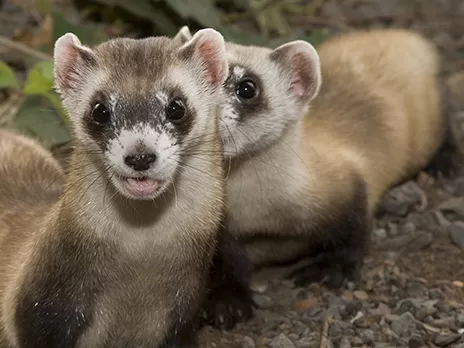
01
Assumed to be extinct in the early 1980s, the black-footed ferret population has rebounded to endangered status thanks to efforts by the National Zoo. Credit: Smithsonian National Zoo
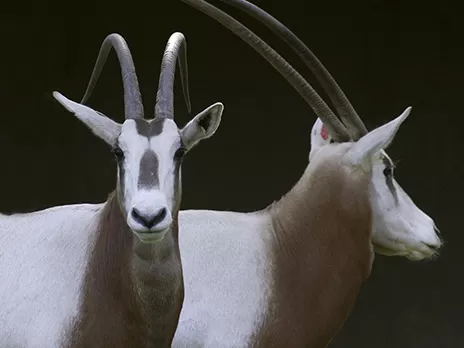
02
The zoo is helping to restore the scimitar-horned oryx population, which is now extinct in the wild, in hopes to reintroduce it to its native Tunisia, Niger and Chad. Credit: Smithsonian National Zoo
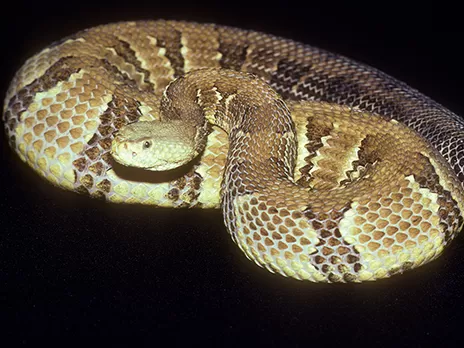
03
The timber rattlesnake in America is not endangered, but populations are decreasing due to deforestation and development across the U.S. Credit: Smithsonian National Zoo
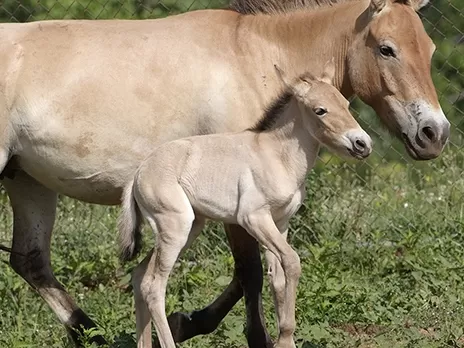
04
Wild horses from Mongolia, Przewalski's horses are considered critically endangered. Credit: Smithsonian National Zoo
History
DC’s zoo story begins back in 1886, with the founding of the National Museum’s Department of Living Animals. By 1889, an act of Congress officially created the zoo, with plans overseen by secretary of the Smithsonian Samuel Langley, conservationist William Temple Hornaday and landscape architect Frederick Law Olmsted, who designed the grounds of the U.S. Capitol.
The trio created both a public destination for animal lovers and a refuge for wildlife under attack in North America.
By the 1960s, the zoo had moved from exhibiting a small collection of exotic animal species to becoming a major force for conservation, as its efforts focused more intently on breeding and studying endangered species and providing its inhabitants with professional healthcare. In 1958, the zoo hired its first full-time veterinarian. By 1975, the Conservation and Research Center was founded, which is now known as the aforementioned Smithsonian Conversation Biology Institute.
Experience
Visit the National Zoo today (passes are required) and prepare to be dazzled in this oasis of animal wonders. With 18 distinct areas to explore, make sure to don your best walking shoes.
Make sure you visit Elephant Trails, where you can observe Asian elephants in a two-acre outdoor space. The Small Mammal House is a veritable variety show of species; golden lion tamarins live here, as do lemurs, meerkats, foxes, ferrets, mongooses and armadillos. The Great Ape House is home to gorillas and orangutans and you might see the latter swinging around on the O Line, a 50-foot-high suspended cable track that extends outside the habitat. The Reptile Discovery Center will have the kids marveling at king cobras, rattlesnakes, tortoises, crocodiles and gila monsters; a Komodo dragon exhibit is also located just behind the building. There’s also lions, tigers, bears, bison...we could keep going. You should just go ahead and start planning your route.
Planet Word
The free museum highlights the incredible power of language through interactive exhibits and word-themed installations. Planet Word is the world’s first voice-activated museum, a technological achievement that aims to inspire a love of literacy through a multicultural lens.
In So Many Words ...
- Located at 925 13th Street NW in the Franklin School building, one of DC’s first public schools
- The site of the world’s first wireless voice transmission, conducted by Alexander Graham Bell in 1880
- A major restoration revitalized the Great Hall, replicating the original frescos and grand staircases